Showing posts with label Indian dessert. Show all posts

Thursday, 22 October 2015

Puran poli : Dussehra special

Happy Dussehra to everyone reading this :))) Last year i had posted the recipe of Coconut Barfis (Naaralachya vadya - click on the link to read more about the festival) and today, i am posting that of Puran poli. Yes, it had to be a sweets-post since it's festival time, and how can the celebration be complete without making or eating sweet :) Some of the combinations are all-time favourites in a Maharashtrian home like Shrikhand- puri, Basundi-puri or Puran poli-kataachi amti etc. 


Puran poli is basically a flat-bread stuffed with a sweet filling of skinned split bengal gram and jaggery. The best part about Puran poli is, it tastes good even when it's cold ( or even a day old :)) . Usually eaten with a generous amount of tup (ghee) on top, it can also be eaten dipped in milk or with Kataachi Amti. As we say, the food and water changes every 10 kms in India, the same way - the method of preparation and ingredients vary in different regions in Maharashtra. Some add grated coconut to the sweet filling, some make the filling with sugar or a mix of jaggery and sugar both. For the covering, some make it with wheat flour and some with maida (all purpose flour) or a mix of both. Recently, one of my sister in law told me that in her village, the covering is made of suji (rawa). For flavouring, nutmeg and/or cardamom powder is added.

So, the recipe is actually quite easy- less ingredients and not much of cooking time. But the tough part is to roll the polis (breads) without letting the filling come out. If the filling comes out (which surely will, the first time you make it), it will burn while cooking the roti. So, to avoid it, just dust a little flour on the filling, and roll again.


You can fry the rotis with oil or ghee as per your liking, but ghee of course adds the flavour. So, diet conscious people, let the dieting stay away during festivities, what say? :) Also, you can make Puran one day prior and keep in the refrigerator. Puran(the filling) stays good in an air tight container in refirgerator for even a week. You can also eat Puran as it is with a plain roti adding little ghee on top... Tastes absolutely divine :)

Preparation time : 35-40 minutes
Cooking time : 20-25 minutes
Serves : 2-3 people
Recipe type: Indian flatbread

Ingredients:

Chana daal (Skinned split bengal gram) - 1 cup
Jaggery - 1 cup 

(The right amount of sweetness is always to take equal quantity of lentil and jaggery)

Cardamom powder - 1/2 tsp
Nutmeg powder - 1/4 tsp

All purpose flour - 1 cup
Wheat flour - 1/2 cup
Oil - 5 tbsp
Ghee - 1 tbsp
Ghee - to fry the polis


Recipe:

Wash the chana daal well. Pressure cook the washed chana daal along with 2 n half cups of water for 4-5 whistles. Switch off the flame, let the pressure subside. Now drain the daal and remove water thoroughly.

Use this water to make Kataachi Amti.

Sift the all purpose flour and wheat flour together. Add in 5 tbsp oil and mix well.

You can also add a little of turmeric powder for colour. 

Now, add water little by little and knead into a nice elastic dough. Put the dough in a bowl, cover and let it rest.

Heat 1 tbsp ghee in a kadhai, and add the cooked chana daal. Add in the jaggery and mix well. The mixture will turn to a thin consistency as the jaggery will melt. Let it cook till the mixture forms a nice thick ball. Keep stirring in between to avoid burning or sticking to the kadhai. Lastly add in the cardamom and nutmeg powder and mix well.

Now traditonally this mixture used to be put through the Puran Yantra (Puran Maker) for a very thin soft puran, but since i didn't have that, i just mashed it with a masher and it was fine. I tool the idea of mashing the puran from here.

Now, make equal sized balls of the puran and the dough both.

Make sure the filling in each dough-ball is good enough for the taste to come.

Roll the dough in a small puri-shape and add the filling in the centre. Now with your fingertips, gently close the sides of the dough in the centre to cover the stuffing. Now roll this into a roti. You can use all purpose flour or rice flour to roll the roti.

Heat a tawa. Place the roti on the tawa and fry on both sides till golden in colour adding ghee on top. 

Puran polis are ready. Don't forget to enjoy one served hot right from the tava with ghee on top. 


Happy Cooking :)


Monday, 20 April 2015

Shrikhand

Tomorrow is Akshay Tritiya, a holy day for Hindus. I had already explained about Akshay Tritiya in my last year's post of Dudhi Halwa. As it is said, that Akshay Tritiya is a good time to purchase gold, experts had a different view published in Economic times. Low inflation and rising interest rates are bad news for the metal, they say. The dollar prices might rise, and hence the gold prices would drop down by 10 % by the end of year. So, all my friends who are wanting to purchase gold tomorrow, just buy a token. For people like me though, purchasing kitchen items is as good as buying gold :) (All my blogger friends here would agree, won't you?) So i have treated myself to a new Mixer-grinder on this Akshay Tritiya. My old mixer started showing tantrums two days ago (Guess it knew some festival is coming!!!)


No auspicious or holy day is complete without a sweet. So, here i am posting the recipe of Shrikhand. A simple meal of homemade Shrikhand, puri and batata bhaaji (Aloo sabzi) completes a Maharashtrian festival for me. Shrikhand-puri is a match made in heaven. I have stressed on the homemade, because the store bought Shrikhands are way too sweet these days. Shrikhand has a lot of Maharashtrian charachter to it, i feel, and has mixed flavours of sweet, sour, smooth, rich and yet simple to make. My hubby almost finishes 2-3 vaatis of shrikhand at one go, so i have gone easy on the sugar addition here. 

Shrikhand is basically saffron infused yogurt. I normally make yogurt at home, but you can use thick readymade yogurt too. If you get Chakka (Yogurt cheese) readymade, then this dessert is ready within minutes. I couldn't find Chakka near my place, so i made it at home the traditional way. When we were kids, there used to be a machine(Puran Yantra) which would have to be operated manually to uniformly mix the chakka and sugar. So me and my brother would take rounds to turn the knob round and round to see the thin noodle like shrikhand coming out of the yantra. In the end our hands would pain, and mom would always end up cleaning the mess :) Nostalgia!!!


For a fruity version of Shrikhand, check my recipe of Aamrakhand - Mango Shrikhand .

Ingredients:

Milk - 1 and half litres of whole milk (You can't eat shrikhand if you are calorie conscious. This dessert will not taste good with skim milk or any kind of toned milk)
Yogurt - 1 tbsp
Sugar - 1/2 cup (Adjust according to taste)
Saffron strands - 4-5 
Nutmeg - 1/4 tsp
Cardamom powder - 1/2 tsp

Nutmeg and Cardamom powder is optional. You can use both or one or omit them altogether. Traditionally, Charolya or chironji is used too, but i didn't have them handy.


Recipe:

To make yogurt: Boil the milk and let it cool to room temperature. Pour the milk in a wide bowl.

Add the yogurt to this milk and stir it along with the cream on top. Cover with a lid.

Let the yogurt set in a warm place undisturbed till firm. If the place is warm, it should set in about 6 hours or so.

You can set this yogurt the previous day and refrigerate and prepare the shrikhand the next day.

To make Yogurt Cheese/Chakka: Place a muslin cloth (pancha as we call in marathi) in a strainer (or colander) over a bowl. Make sure you take a big cloth, so you have enough space on the side to tie it later.

Pour yogurt in the cloth. Now bring the sides of the cloth together and tie a knot tightly just above the yogurt. It looks like a firm ball. The whey starts draining out of the cloth.

Now you can either put some weight on this and let it drain or tie it to a place from where it keeps dripping or draining. The whey can be used to knead doughs or make gravies.

After about 4-6 hours, the ball of yogurt would look dry. 

To make Shrikhand: Remove the chakka in a bowl. You can refrigerate the chakka in an air tight container for upto 2 days.

Now, beat the chakka well till it becomes smooth.

Grind the sugar to powder.

Warm about 2 tbsp of milk, add saffron to it.

Make a coarse powder of cardamom seeds in a mortar and pestle.

While beating the chakka, add the powdered sugar little by little and keep mixing it well.

Now add the cardamom powder, nutmeg powder and saffron milk to it. Add more milk if you require a thinner consistency. The shrikhand should not be runny. It should be as thick to remain on a plate. 

Mix everything well till smooth.

Tastes best when served cold, but even at room temperature. 


Happy Akshay Tritiya to all of you readers and May you be blessed with peace, happiness, success and satisfaction :)

Happy Cooking :))


Tuesday, 31 March 2015

Anokhi kheer : Royal cuisine

I always have a conflict in my mind over "Tradition v/s Modern". I don't mean here in the sense of clothes, fashion or freedom but the cultures and values that that make us who we are. In the age of modernization, the originality is somewhere lost and we are losing connection with our roots. I am not being judgmental here or biased, but i would love to see kids play outdoors than play X-boxes and Playstations. I would love to see them having their food hearing the birds chirp or watching the sky than watching Doremon's and Chota Bhim. This definitely doesn't mean you are raising a Tarzan, but life's teachings are the best than those learnt with technology. A very dear friend of mine from Spain closed his Facebook account recently and while we chatted on email, he gave me a very good reason on "Going natural". He said, we are so dependent on "Apps" that we have lost our tendency of natural instincts. No doubt, we rely so much of G maps (For some reason, i find those even more confusing :)) when we have a tendency to find the places ourselves.


On the other hand, I experienced a "hands-on" example of "Benefits of technology" recently, when my Cylinder gas finished all of a sudden on Saturday night. It wouldn't have been so much of a worry if we had just two mouths to feed (Me and Hubby). But here we had three 4-legged paws with us (My pet sitting clients) who ate home-cooked meals. So, the microwave came to the rescue. Rice, chicken and veggies - everything went straight inside and my pet-paws licked their bowls clean with wagging tails :) If not for microwave, i would have had to scratch brains what to feed them. (Of course, there is always an option of raw veggies, fruits, curd etc but some paw kids won't taste food without chicken :))

So, the conflict always remains but somehow i am a little inclined towards the traditional, old-age, historical stuff. With food too, i love to dig out old recipes, read how it's traditionally cooked and try them out. This curiosity has definitely got me hooked to this "Lost recipes" program on Epic channel. In one of the episodes, they covered all about the Hyderabadi cuisine. Normally they show 3 recipes in one episode, so one of the recipes in that was Anokhi Kheer. The recipe sounded so simple, that i at once, tried it and it tastes delicious. 


The recipe was shown cooked by Mrs. Geeta Devi who belongs to a family that worked closely with Nizams and thus has access to all the royal recipes, which are published in her book : The Jewels of Nizam - Recipes from the Khansamas of Hyderabad. Geeta Devi has been associated with the Golkonda Hotel, Hyderabad as a food consultant, and hence i believe this kheer is available at their restaurant. She describes her expertise as "Deccani cuisine" and dug into the history of Nizam cuisine to find out the traditional recipes and their methods of cooking. Cooking during those times was mostly subjected to availability of raw materials, hence this Anokhi kheer came into existence.

Anokhi kheer she says basically would have been influenced from Afganisthan and is made of dry fruits and onion. Yes, a kheer made of ONION!!!!This kheer was also eaten by poor men, as onions during those days were cheap and would be a part of the ration that one got. This kheer was eaten during summer time as onions lower body temperature. In winters, "Gobi ki kheer" or "lasan ki kheer" was made to keep the body warm. 

Ingredients:

In the program, she used 100 gm onions for 2 litres of milk, but i made it into half quantity. 

Milk - 1 litre (I used full cream, but you can use toned or skimmed milk too)
Onions - 50 gms (about 1/3 cup)
Cardamom - 8-10
Almonds - 1/4 cup (Add more according to choice)
Pistachios - 1/4 cup (Add more according to choice)
Sugar - I added about 5-6 tsp (Adjust according to taste)


Recipe:

Boil the milk and simmer on low flame till it starts to thicken.

Meanwhile, slice onions lengthwise and wash them about 4-5 times to remove the bitterness or spiciness if any (Depends on the kind of onion you are using).

Soak the almonds in water and when soft, chop them lengthwise or crush them lightly in a mortar and pestle.

Also chop the pistachios lengthwise.

Remove cardamom seeds and make them in a powder in a mortar and pestle.

Once the milk has reduced to half, add the onions. 

Keep stirring at intervals and scrape the cream from the sides.

Once it turns pinkish, add the cardamom powder.

Stir in sugar and mix well. Simmer till sugar dissolves and milk reduces little more.

Add half of the dry fruits and mix well.

While serving, add rest of the dry fruits on top to garnish.


Anokhi kheer is ready :)

By the way, for all my friends who don't know Hindi, Anokhi means "Different or unique". An onion kheer is definitely unique, isn't it?

I have purposely kept the consistency a little thin, but you can thicken it as much as you want. Just make sure it shouldn't be too thick like a halwa.

Happy Cooking :)


Wednesday, 4 March 2015

Dinkaache laadoo

We all know of the famous quote "Change is the only thing constant in life". As much as it is true when applied to life, i think it is true with one's food habits too. We all liked some ingredients/dishes as kids which now we don't fancy much, or vice-versa. Take laadoo for example. As a kid, I would eat rava laadoo or besan laadoo which was made during Diwali (I still do, but just 1-2 is enough now for the taste as compared to when i was younger, i would love and relish eating lots of them). I am not much of a fan of Motichoor ladoos, but we Maharshtrians make "Aalivache laadoo". I don't know if you all are aware of it. My mother used to make them at home. Ahh, the name has got me drooling as i haven't had them in ages! It's definitely one of the blog post soon (though they are best eaten in winters).

Aaliv is water cress seed or garden cress seed, also known as "Halim" in Hindi. Just as aaliv ladoos are eaten in winters, Dinkaache laadoo are best eaten in winters too. So, though i am late for this post, i thought of posting it seeing the cold windy airs and "rains in February" climate doing the rounds in India. Dink means gum in marathi , also known as "Gond" in Hindi. I was not much of a fan of these laadoos until my mother in law made them for me once! Since then, she always makes a point to pack these laadoos for me. These laadoos are sent by her from Pune and i thought i will archive the recipe, so in future i can make them too.


I have had Dinkaache laadoo at the famous Chitale Bandhu in Pune. No doubt, they were good, but the saazuk tup (homemade ghee) or the amount of dry fruits or good quality edible gum that my mother in law uses beats the commercial laadoos any day. One laadoo and a glass of milk serves as a nutritious breakfast for kids, or even adults. These laadoos are given to lactating mothers for fast recovery and it is known to increase milk production. When eaten in winters, it helps keep the body warm. So these laadoos definitely have loads of pluses - one more to add to be known as great energy boosters.

There are various ways in which these are made. Some add whole wheat flour instead of daal. Some add more of coconut instead of dry fruits. The nuts and dry fruits choices varies according to people, and some add jaggery/sugar according to choice. Now my Mother-in-law here has made these with urad daal and without sugar/jaggery.


Ingredients:

Urad daal - 250 gms
Kaju (cashews) - 250 gms
Badam (Almonds) - 250 gms
Pistachios - 250 gms (optional)
Kharik (dry dates) - 250 gms
Dry coconut (grated) - 250 gms
Dink (Edible gum) - 100 gm
Khajur (Dates) - 1/2 kg (You can use less of these, if adding jaggery or sugar)
Ghee - Between 1/4 kg to 1/2 kg
Nutmeg powder - 1 tsp
Cardamom powder - 1 tsp


Recipe:

Take a pan and dry roast the urad daal. Keep stirring till it becomes brown. Now let it cool. After it cools down, make a powder of it in the mixer-grinder.

Remove seeds from the dry dates and make them into small pieces. Dry roast it for a while and let it cool. Now powder them in a mixer-grinder.

Follow the same procedure for the dates, if you don't have seedless dates. 

Dry roast the kaju, badam and pistachios lightly and grind them to a powder in mixer grinder or just coarsely grind them with a mortar-pestle.

Heat 2 tbsp ghee in a kadhai and fry the edible gum (they will puff up immediately). Remove when they are light coloured.

In the same pan, roast dry grated coconut till it becomes light brown.

You can grind the roasted coconut and edible gum to a powder in mixer and grinder or just coarsely grind it in mortar pestle.

Add little more ghee to the pan (around 2 tbsp more if required), and now fry the urad daal peeth (powder we made earlier) for about 8-10 minutes. Make sure it doesn't burn or become dark brown, so keep sauteing it.

Now add the remaining ghee to this. Mix well.

Remove from stove and add the coconut, edible gum, the dry fruits and nuts, cardamom powder and nutmeg powder and both the dates.
If you feel they are less sweet for your taste, add little powdered sugar or melted jaggery.

Roll into ladoos and store in an air tight container.


Happy Cooking :)


Friday, 30 January 2015

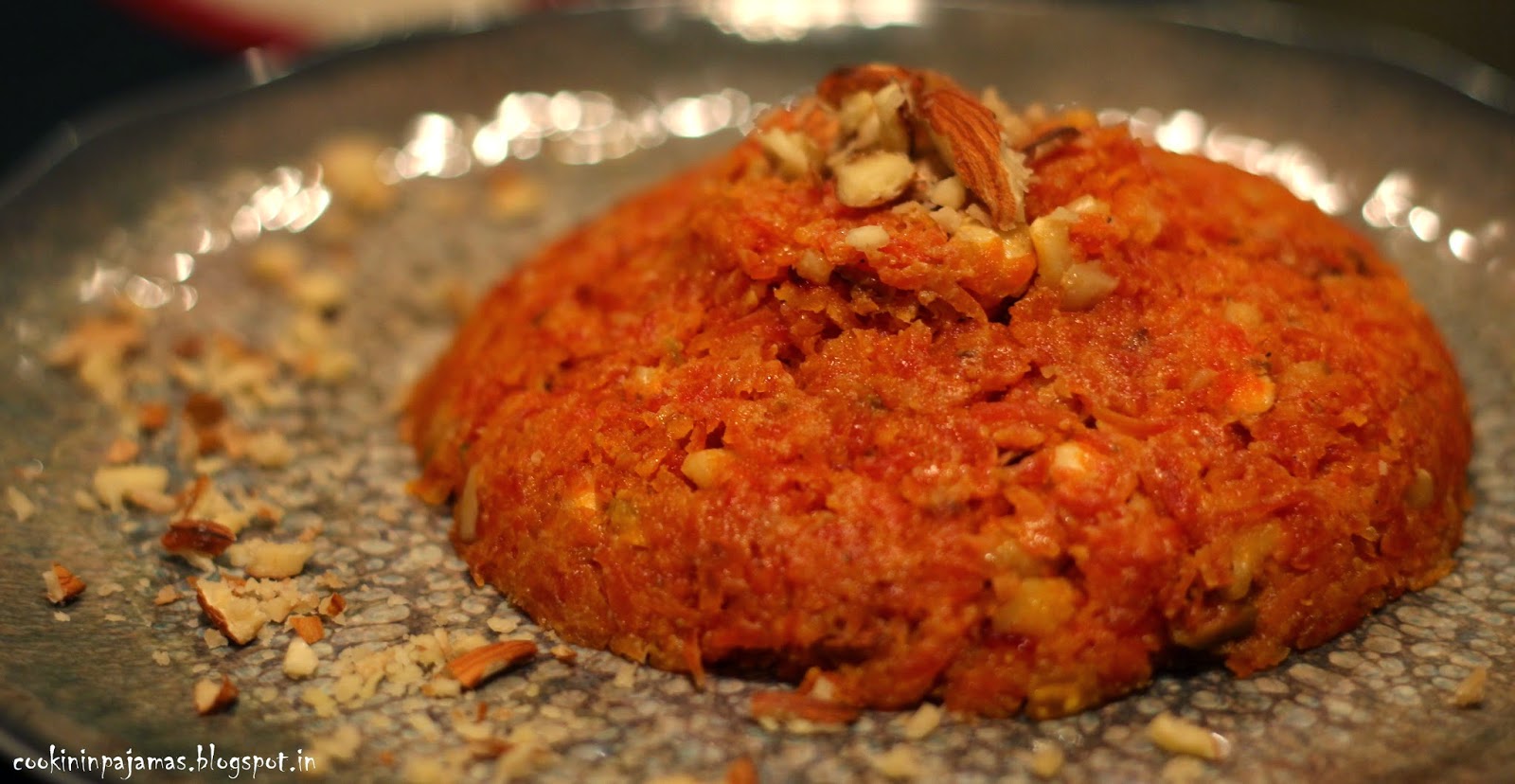
Gazarachi kheer : Carrot Kheer

I'm on a carrot-cooking spree!!! Gajar halwa, Gajar pickle and i even made gajar chutney of which i will post the recipe soon. Guess, it's just the season (or the fact that i got 1 kg carrots at a steal price at the Sunday market :)). Whatever the reason, can't deny the fact that carrots are good for health and hence, a little overdose of them won't do any harm. Of late, my sweet cravings have increased that after every meal, i at least need a bite of chocolate if not anything, just to satisfy myself. So, every other day a dessert is made in the kitchen! Me and hubby both are kheer lovers. So, i digged into my refrigerator and found half a can of milkmaid and carrots! There! My dessert recipe was done!


Carrot kheer can be made with or without addition of rice. I have added rice, just because i wanted something wholesome to our otherwise light dinner of Maggi and egg :


Have any of you tried this combination?It's unbeatable, right? 
So, you can make the kheer without rice. Also i have added milkmaid, but you can replace it with sugar or add both according to personal preference. We like it a little less sweet and since i had milkmaid in the fridge, i decided to make with the same. Addition of milkmaid also gives it a thick consistency - somewhat like pudding. 

But trust me, whichever way you make it, you are going to lick the bowl clean. It tastes absolutely delicious!!!

Ingredients:

Carrots - 3
Milkmaid - 3 tbsp
Cardamom powder - 1/2 tsp
Almonds - a few
Raisins - a few
Ghee - 2 tbsp
Rice - 1/4 cup
Full cream milk - 1/2 litre


Recipe:

Soak 1/4 cup rice in a little water for about 15 minutes and then drain. Set aside for another 15 minutes.

Boil the milk and simmer it. Keep stirring in between so it doesn't stick to the bottom and also scrape the malai from the sides of the vessel.

Wash, peel and grate the carrots.

Heat ghee in a pan, add carrots and saute for about 3-4 minutes. Don't saute it a lot till they change colour (like we make halwa), this is just so they turn a little soft. Now add the rice, mix and saute along with the carrots for about 4-5 minutes.

Add this to the simmering milk and mix well.

Keep stirring in between and cook till milk starts to reduce (it almost reduces to half). By that time, the rice is cooked too and the carrots become soft and one with the milk.

Now add in the cardamom powder and raisins.

Crush the almonds with a mortar and pestle (just so it breaks uneven) and add to the milk.

Lastly, add in milkmaid. Check the sweetness. If desired, add more milkmaid and/or sugar and cook till sugar dissolves.

Garnish with chopped almonds.


Note: If you are adding sugar instead of milkmaid, add it to the milk before adding the carrot and rice. If you feel the kheer has thickened a lot, add little milk. I added homemade cream (saay, as we call it in Marathi - the cream on top of milk boiled). Or you can refrigerate it and have it as a pudding.

Happy Cooking :)
Friday, 16 January 2015

Payesh

Having Bengali friends around and not posting a single Bengali recipe was not going so well with me. I have tried making a lot of Bengali dishes lately of which Baingan Bhaja and Payesh are my favourites. Aloo Poshto tastes lip smacking too, but i havent tried making it yet. Guess that's this weekend menu, since i do have khas-khas (poppy seeds) in my kitchen! 

Every cuisine have their own distinct flavours and methods of preparation. Let's take Payesh - a kheer made from rice and boiled milk. There are so many different ways of preparing it. Some would boil the rice and milk together, some would boil the milk and then add rice. Some would add jaggery, and some would add sugar or a mix of both. People even make it with condensed milk or a mix of all. A friend of mine doesn't add jaggery but a paste of cashews and sugar. As they say...the food, water, taste changes every few kilometers in India.

I always feel that a particular dish tastes different related to a lot of factors. Lets say a simple bread butter toast would taste different sitting at home or at a dhaba or sitting by the riverside on a picnic or some 5 star hotel. The ambiance, the weather, the people you are with everything matters for the food that we eat. The taste also matters in regard to who is it cooking , and in what frame of mind. The same dish would taste different if i am cooking it with feelings of anger/frustration or so of happiness/ calmness. And it applies to the one eating it too. A dish would taste different if my mind is preoccupied with something else, or if i am watching television while eating or if i am reading a book or watching nature. Don't you all feel so? Give it a try.

Well, coming back to the post. A dear friend of mine got me some nolen gur (Date palm jaggery)during her visit back home. 


Since it was Sankranti yesterday, i thought of making Payesh. I couldn't post any recipe/picture yesterday, since my internet was down for almost 2 days for some reason. Yes, i definitely did make Til-gul (which i had posted last year), and here's wishing you all "Til gul ghya goad goad bola" :)


Payesh, as i made it with Nolen gur (Suggestions from 2 bengali friends):


Ingredients:

Full cream milk - 1 litre
Rice (i took Basmati rice) - 1/4 cup
Nolen gur (Jaggery) - little less than 1/2 cup (add according to taste)
Cardamom powder - 1 tsp
Bay leaf - 2

That's it! 5 ingredients and you are done!! You can add nuts, nutmeg powder, sugar etc according to your wish but i preferred keeping it basic.

Recipe:

Wash the rice till water is clear, drain and keep aside.


Bring the milk to boil and keep boiling it on sim to reduce it. 

Make sure you keep stirring it in between, and also scraping the cream from the sides.

After about 10 minutes, add the 2 bay leaves to the boiling milk.

Once milk reduces to 3/4th, add the rice. Now let the milk boil till rice is fully cooked. The milk will start changing colour to little yellowish.

Once the rice is cooked, the milk will have reduced to almost half. Now add the cardamom powder and mix.

Turn off the stove. Now add the jaggery (Add little pieces or grated jaggery and stir - it will melt automatically when you stir- no need to boil/cook it).


Payesh is ready!!! This one was loved by hubby's colleagues at office :) The nolen gur takes the taste to almost another level, but you can add normal jaggery instead too. 


Happy cooking :)


Monday, 29 December 2014

Gajar Halwa using condensed milk

I have already posted the traditional method of making Gajar halwa using khoya before : Gajar ka halwa . This time, i made the recipe using condensed milk (Milkmaid). Not only did it make the halwa quicker, but the thick consistency and texture was perfect! I saw this recipe on a food show on television and decided to try it out, since i wanted to make a quick dessert for guests coming over.

Yes, grating the carrots is no quick thing, and requires tremendous efforts and patience if you are making the halwa in bulk quantity. But one spoonful of the halwa melts in your mouth, and all the efforts seem worth it :) And when better to make it than this season!!! The carrots these days are so red and juicy, that we are eating it as a salad with almost every meal! 


Adding milkmaid already makes the halwa sweet, so there is no need to add extra sugar (we like it a bit less sweet), but if you like it very sweet, then do add more milkmaid or some extra sugar on top. Adding kesar is totally optional, but i somehow love it.

Ingredients:

Carrots - 1/2 kg
Ghee - 3 tbsp
Milkmaid - A little less than 1/2 tin
Cardamom powder - 1/2 tsp
Nuts - Almonds, cashews, raisins - add any of your choice. I crushed almonds and cashews coarsely in a mortar and pestle. Keep some aside to garnish.
Kesar - a few strands
Milk - 1 tbsp


Recipe:

Wash, peel and grate the carrots.

Warm the milk and add the kesar strands to it and keep aside.

Heat ghee in a pan and add the carrots. Saute them till they are cooked. They will change a bit of colour and leave water. Keep stirring in between to avoid burning.

Now add the condensed milk. Stir well and then add the cardamom powder.

Always keep the flame low. Keep stirring to let the halwa cook. You will know it's cooked when it dries up and starts forming a ball.

Check the taste if you need to add more milkmaid or sugar.

Now add the kesar and nuts and mix it all well.

Garnish with some nuts and tastes best when served warm in this season.


You can store it in air-tight container and refrigerate. The halwa stays good for almost a week.

Happy Cooking :)))

Sunday, 22 June 2014

Mango Kulfi

Summer Treats : My earliest memories of kulfi are, when i used to visit my cousins in Badlapur ( a city in Thane district of Maharashtra) during summer vacations, and there used to come a kulfiwala shouting "Kulfiiiii" ( He had a peculiar accent and it took time to understand that he is saying the word kulfi, the pronounciation was always smudged, hehe ). We used to wait for this kulfiwala, who used to come in afternoons. A typical kulfiwala used to wear white loose pajamas and white shirt with a white Gandhi cap. His kit used to consist of a pot surrounded by a cane basket covered with a wet red cloth which he used to carry on his head. The pot had some ice cubes and salt and aluminium kulfi moulds in it. He used to easily take out the kulfi from the mould by rubbing the sides of the mould, and insert a stick and give to all the kids surrounding him and waiting for their share. And the best part!!! We only used to get it for 50 paise!!! Though getting a 50 paise during that time was a task for us. So we always had to catch hold of our elder brother ( who used to get pocket money that time ) to treat us with the kulfi :) Those were fun days!!! And my sister just told me , that though there are very few kulfiwalas left now, we still get it...the price having being increased to INR 10/- considering the inflation in mind. This kulfi was our summer treat along with Pepsi-colas, Golas, and Limlets and poppins :) Ahhhh those old days!!! Nostalgia...

Picture taken from the Google Images :

A Kulfiwala


Well, Kulfiwalas are replaced with ice cream corners now. And we get modern day kulfi's well-packaged, with different flavours, and MRP's written on them. Yes, there are a few places where kulfi is still made the traditional way and they have that authentic taste. One that i remember back home in thane is Sri Ram Ice-cream which sells amazing pot kulfi.There is also the famous  Roller Ice cream , the one i had in Delhi at the National Street food festival and how can we forget the Tillewali kulfi . 

Kulfi is basically a frozen Indian dessert made with full cream milk. The thickening of milk is an important factor while making kulfi. A lot of people make kulfi these days with condensed milk or even milk powder to save on the time and energy of reducing the milk. But i have made this kulfi the traditional way, by reducing full cream milk to 1/3rd. Add any fruits or dry fruits or fruit pulp of your choice to make it more exciting :) The process is very simple, the time consuming factor is only the milk-reducing process. So here's how i made Mango kulfi :


Ingredients:

Full cream milk - 1 litre
Mangoes - 2
Sugar - 1/2 cup ( adjust according to taste )
Cardamom seeds - 5
Pistachios - 8-10
Almonds - 8-10
( You can add any fruits or dry fruits of your choice, and choose the amount according to taste )

Recipe:

Boil milk and reduce the milk till 1/3rd. Stir from the very bottom after every 5 minutes or so, so that the milk doesn't stick to bottom. This process takes about an hour or 1 n half hours. The milk will thicken, and change colour too. 

Now add the sugar and boil till the sugar dissolves.

Now remove from the stove top and let the milk come to room temperature.

Remove the pulp from mangoes and make a smooth paste in the blender. Keep some chopped pieces of the mangoes separately, to add in later ( about 1/4 cup )

Make powder of the cardamom seeds using a mortar and pestle.
Once the milk comes to room temperature, add in the mango pulp and mix well or you can even use a blender.

Add in cardamom powder, chopped pistachios and almonds, mango pieces and mix it all well. 

Pour the mixture into kulfi moulds or whichever mould you want to se the kulfi in. I set it in a large bowl.

Keep it in freezer for 7-8 hours.

Cut the kulfi into pieces an serve along with chopped mango pieces or garnish with some pistachios or almonds.

This summer dessert tastes is unbeatable, and am sure everyone in your home would love it.

Note : If you want to make this recipe quick, then you can boil 1 cup milk with 500 gms khoya, rest of the procedure is same. And if you want to use condensed milk to add thickness to the kulfi, use 3 cups milk and 1 cup condensed milk ( Since you are adding condensed milk, which is already sweet in taste, check before adding sugar and adjust according to taste )

Happy Cooking :)


http://gayathriscookspot.com/2014/06/maavilakku-and-announcing-wtml-june-host-and-may-winner/


http://sweettoothraf.blogspot.in/2014/05/wtml-june-2014-event-announcement-with.html

Thursday, 1 May 2014

Dudhi Halwa : Akshay Tritiya special

Dudhi, Lauki or Bottle Gourd is one vegetable that has to be cooked with special care, as it doesn't taste delicious when cooked in a simplistic way. So you always add to add some flavours and spice to it to enjoy it's taste. Whenever i buy Dudhi ( for all it's nutritional and medicinal benefits, i don't like to skip buying this vegetable at all ), i either make dudhi kofta curry or dudhi halwa. Recently my Mother-in-law told me one terrific way to make an instant ( and delicious ) dudhi sabzi along with moong daal, i will surely post that recipe soon! But meanwhile, since it's Akshay Tritiya tomorrow, i decided to post some sweet for this auspiscious day!!

Akshay Tritiya is believed to have been the day when Lord Ganesha and Ved Vyas began to write the great "Mahabharata". It is a very holy and auspicious day. For us, Akshay tritiya as kids meant eating sweets, going to temple and putting Rangoli at the door. This day is also associated with buying gold, as Akshay means Infinite ( something which never recedes ). So some charity done on this day surely gets you blessings, and good luck. New ventures started on this day brings in prosperity. So here's wishing you all a Happy Akshay Tritiya and loads of happiness!!!

( Pic taken from Google Images )

Ingredients :

Dudhi - 1 medium sized ( Make sure you always buy Dudhi which is long and elongated and raw without any stains )
Milk - 1 to 1 and 1/4 cup 
Ghee - 2 tbsp
Khoya - 3/4 cup ( I love khoya, and it's taste in the halwa. If you are not a Khoya fan, then add about 1/2 cup. You can skip this completely too and add milkmaid instead of Khoya or readymade pedhas/barfis )
Sugar - 1/2 cup ( we like it little less sweet, adjust according to taste)
Cardamom powder - 1/4 tsp
Cashews - for garnishing
Raisins - for garnishing

Recipe :

Wash the Dudhi and remove it's skin. Grate it. Let it stand for 2-3 minutes. Now remove water from the Dudhi completely.

Heat Ghee in a Kadhai and saute the grated Dudhi in it for about 3-4 minutes on medium flame. 

Now add Milk, mix it well and cook covered till Dudhi is well cooked. Keep stirring in between so it doesn't stick to the kadhai. If you find it too dry, add little milk extra.

Now add the Khoya ( separate/mash it with hands ), mix it well so that no lumps are formed. Cook for about 2-3 minutes.

Lastly add the sugar, cardamom powder and cashews. Cook till the sugar melts and the mixtures starts forming a ball like halwa.

Serve hot or cold as preffered. Also tastes great with vanilla ice cream if you want to create a fusion dish!

Happy Cooking :)


Wednesday, 19 February 2014

Sheera : Angaarki Chaturthi special

Angaarki Chaturthi : Yesterday was Angaarki Sankashti Chaturthi. Sankashti Chaturthi is celebrated in every Lunar Month or Hindu Calender Month on the fourth day of the waning phase. ( i.e it comes on every 4th day after Full Moon of Hindu Lunar Calender Month ). This day is dedicated to Lord Ganesha and if this chaturthi falls on a Tuesday, it is called Angaarki Chaturthi. It is considered an auspicious day and people observe fast to pray to Lord Ganesha to remove all their problems ( Sankat Hara Chaturthi ) in life, as HE is known to be!!!
People break their strict fast only after the sight of the moon followed by prayers to Lord Ganesha. Normally "Sheera" is made as an offering to the Lord as "Prasad".

The Story our Granny told us : According to Hindu Mythology, Angarak, the son of Mother Earth and Bhardwaj Rishi, was a great devotee of Lord Ganesha. And on one such Tuesday which was Sankashti Chaturthi, Lord Ganesha blessed him and asked him for a wish. Angarak expressed his wish to be associated with Lord Ganesha forever. Hence Lord Ganesha granted his wish and proclaimed that whoever worships Lord Ganesha during Angaarki Chaturthi will be granted the prayers. That's how Angaarki Chaturthi came to be known as.

Sheera is a very popular sweet dish. It is normally prepared during pooja or any auspicious occasions and is offered as a sweet to the Lord and then distributed amongst all. Sheera is also eaten for breakfast in some parts of Maharashtra. A very easy-to-make dish and very healthy too.


Ingredients :

Rava/Sooji - 1/2 cup
Sugar - 1/2 cup ( or adjust according to taste )
Milk - 2 n half cup
Assorted Nuts ( Almonds, Cashews, Raisins etc)
Cardamom powder - 1/4 tsp
Ghee - 1/4 cup + 1 tbsp( You can't skip this ingredient... it adds all the taste to the sheera )
I Added a few saffron strands dipped in milk for the "Pajama Twist"
   

Recipe :

Heat a pan and add 1 tbsp ghee. Add all the nuts and roast for about a minute or two. Remove and keep aside.
In the same pan, add the 1/4 cup ghee. Once it melts, add the rava and roast on low flame till it starts leaving fragrance and turns golden brown in colour. Don't roast it on high flame or else it will burn and become black. Keep stirring in between and roast for around 10-15 minutes.
Now add warm or room temperature milk to the rawa. Keep stirring, so no lumps are formed.
Cook on low flame for about 5 minutes till the rava becomes soft and milk starts thickening.
Now add the sugar. Mix well and add the nuts. Cook covered till it becomes like a soft thick ball. ( takes about 3-4 minutes )

For prasad, People add a Tulsi leaf on top while offering to The Lord. Some even add banana on top or a mashed banana while cooking.

Happy Cooking :)


Friday, 14 February 2014

Shahi Tukda : Valentine Special

Shahi Treatment for The Prince Charming : Shahi means Royal, and what better way to make your husband feel royal on Valentine's day than to cook his favourite meal and top it all with a royal dessert :) As it was a working day, i decided to arrange a surprise for him...Yes, the usual surprise cards, aromatic candles, love messages in tiffin box, a photo collage, a bottle of wine, some homemade choclate muffins.... All this was definately making him smile. But i guess the way to a man's heart is definately through his stomach...when i cooked his favourite chicken dish for main course, that got him showing me all his teeth :)) And i topped it all off with this dessert....A super fun filled valentine's :) 
Basundi ( Recipe uploaded earlier ) (  http://cookininpajamas.blogspot.in/2014/01/basundi-sweetened-milk.html ) is one of his favourite desserts.. so i normally make it once a month...So, to make something special for Valentine's , i decided to make Rabdi ( More thickened milk ) and top it on the shahi tukda. 


I had never tried this dish before, had only eaten at several restaurants. But making it was super easy and super fun ! Makes for a good sweet craving, and  a dessert everyone will enjoy at your home :)


Ingredients :

Milk - 1 Litre
Sugar - 1/3 rd cup
Water - A little
Ghee - To fry the bread slices
Saffron - a few strands 
Milkmaid ( Sweetened condensed milk ) - 2 tbsp ( This is optional, you can totally skip this or if you want, can add 1-2 tbsp of sugar instead )
Chopped nuts - almonds, Pistachios, Cashews, raisins ( Any of your choice for garnishing )
Bread slices - 4

Recipe :

Soak saffron in about 2-3 tbsp of milk.

Bring milk to boil in a non stick or a heavy bottomed pan. Reduce the heat to sim, and bring the milk to 1/2 of it's original...Keep stirring in between. It will start becoming thick and changing colour.

Now add the condensed milk ( or sugar ). If not, just add the saffron-milk mixture. Keep stirring again and reduce the milk to 1/2 of it's consistency ( comes to about 1/4th of it's original consistency ). It has to be of pouring consistency and not too thick. 

Let it come to room tempertaure. And then keep it in the fridge to cool. This is called Rabdi.

Meanwhile, take sugar in a saucepan and fill it with water just enough to cover the sugar. Let it come to a boil, and then simmer it for around 3-4 minutes more..( Remove a drop and see if it sticks to your finger, and forms a thread... That's when you know it's done)

Now Take the bread slices and cut it's edges. Now cut them diagonally into triangle shapes ( You can cut each slice into 2 or 4 parts, i prefer cutting them into 4 ). Heat ghee in a pan. Now fry the bread slices in ghee on medium/low flame till they become crisp and brown. Its important that the slices be crisp.

Remove and soak on a tissue paper. Now dip them into the sugar syrup for about 10 seconds and arrange them on the plate. Add the cool rabdi on top and garnish with chopped nuts.

Enjoy in the royal dessert... Tastes Heavenly delicious....:))


You can add the sugar syrup to the rabdi and even eat rabdi as a dessert in itself. Adjust the sugar content according to taste.
Alternatively, you can make shahi tukdas and store it in fridge. It stays for about 3-4 days.

Happy Cooking :)